
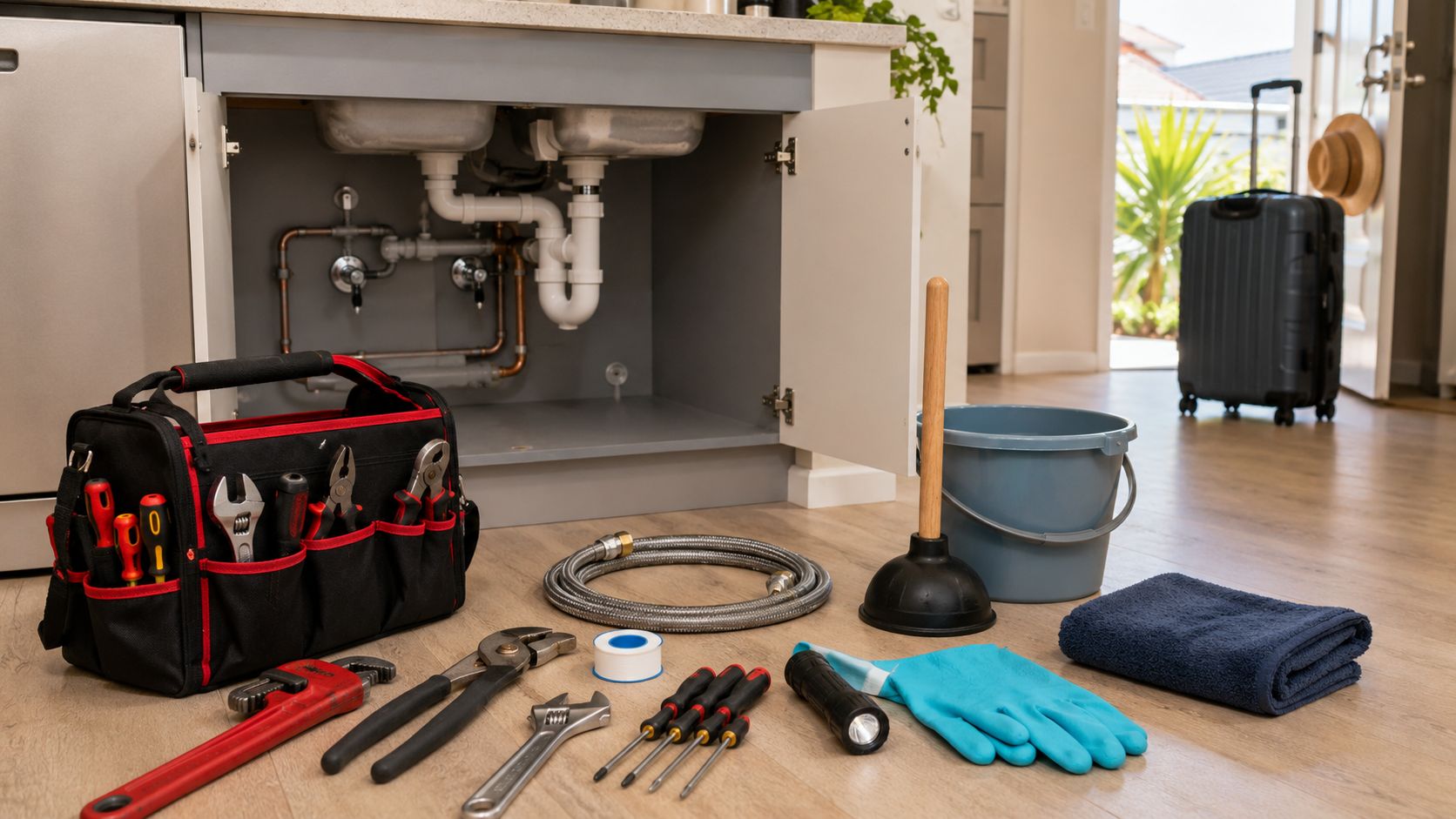
Going away for a weekend, short break or longer holiday should feel exciting, not stressful. But before you lock the front door and head off, it is worth taking a few minutes to check your home’s plumbing.
Most plumbing emergencies do not start as major disasters. They often begin as small issues: a slow drip under the sink, a toilet that keeps running, a partially blocked drain, an ageing appliance hose or a hot water system showing early signs of wear. When you are home, these problems are usually noticed quickly. When the house is empty, however, even a minor plumbing fault can cause serious water damage before anyone realises something is wrong.
A simple pre-holiday plumbing check can help reduce the risk of leaks, flooding, unpleasant smells, water wastage and expensive repairs. It also gives you peace of mind knowing your home is less likely to have a problem while you are away.
If you do notice something concerning before leaving, it is better to deal with it immediately rather than hope it holds out until you return. In urgent cases, contacting an emergency plumber in Canberra, Melbourne or your local region that homeowners can rely on may save you from coming home to a much bigger issue.
Why Plumbing Checks Matter Before a Holiday
Plumbing is one of those things most people only think about when something goes wrong. Before a holiday, homeowners usually remember to lock doors, close windows, empty bins, and switch off appliances, but the plumbing system is often overlooked.
The problem is that water damage can happen quietly and quickly. A leaking pipe inside a vanity, a loose washing machine hose or a faulty toilet cistern can keep releasing water for hours or days if nobody is home. By the time you return, the damage may already be done.
This is especially important if your home has older plumbing, flexible hoses, a hot water cylinder, previous leak issues or drains that have been slow recently. Even if everything seems fine on the surface, taking ten or fifteen minutes to inspect key areas of the home is a smart precaution.
The goal is not to find every possible hidden issue. It is to identify obvious warning signs before they become expensive problems.
Check for Leaks Around the Home
Start with a slow walk through the main wet areas of the house. The kitchen, bathrooms, laundry and hot water system are the most important places to inspect.
Open the cupboards under sinks and vanities and look closely at the pipework, traps and connections. You are looking for moisture, water stains, swollen cabinetry, mould, rust, musty smells or any sign that water has been dripping.
Sometimes a leak is not obvious at first glance, so run your hand carefully along the base of the cabinet or place a dry tissue around visible pipe connections to check for moisture.
In the bathroom, look around the base of the toilet, behind the cistern and around the shower or bath. Water stains, soft flooring, loose tiles or persistent damp smells can all point to a plumbing or waterproofing issue. These should not be ignored before going away.
The laundry is another high-risk area. Washing machine taps, hoses and laundry tub plumbing can leak slowly without drawing much attention.
If your washing machine hose is old, cracked, kinked or bulging, it is worth replacing it before it becomes a failure point.
Even a small leak should be taken seriously if you are about to leave home unattended. A drip that seems minor today can become a steady leak while you are away.
Inspect Taps, Toilets and Showers
Once you have checked for visible leaks, test the fixtures you use every day.
Turn taps on and off to make sure they shut properly. A dripping tap might seem harmless, but it can waste a surprising amount of water over time and may indicate worn internal parts.
If the tap is difficult to turn off, leaking from the base or dripping from the spout, it may need attention before you go away.
Toilets are another common source of hidden water wastage. After flushing, listen for the cistern refilling. It should stop shortly after the flush cycle finishes.
If you can hear hissing, trickling or running water long after flushing, the toilet may have a faulty inlet valve, outlet valve or seal. A running toilet can waste a large volume of water while you are away and may unnecessarily increase your water bill.
Showers should also be checked for dripping heads, leaking mixers and poor drainage. If water pools around the shower drain or takes longer than usual to clear, there may already be a blockage forming.
This is the type of problem that is better handled before your trip, not after you return to a bathroom that smells damp or musty.
Check Appliance Hoses and Water Connections
Appliance hoses are one of the most overlooked plumbing risks in a home. They are usually hidden behind washing machines, dishwashers or fridges, so they do not get inspected often. However, if one fails while the house is empty, it can release a large amount of water.
Before going away, check the visible hoses and connections on your washing machine and dishwasher. Look for signs of cracking, corrosion, bulging, rust, dampness or loose fittings. If the hose looks worn or you do not know how old it is, it may be worth having it replaced.
Fridges with water dispensers or ice makers should also be checked. The small water line behind the fridge can leak if it becomes damaged, loose or poorly connected.
Because these leaks often happen behind the appliance, they can go unnoticed until flooring or cabinetry is affected.
For extra protection, consider turning off the water supply to appliances that will not be used while you are away.
This is especially useful for washing machines and dishwashers. It reduces pressure on the hoses and lowers the risk of a leak developing when nobody is home.
Clear Slow Drains Before You Leave
A slow drain is rarely just a minor inconvenience. It is usually a sign that something is starting to build up inside the pipework.
In kitchens, slow drains are often caused by grease, food scraps, soap residue and general debris. In bathrooms, hair, soap scum and toothpaste build-up are common causes.
In laundries, lint and sediment can contribute to drainage problems. Left untreated, a partial blockage can worsen and become a complete blockage.
Before going away, pay attention to how quickly water drains from sinks, basins, showers and laundry tubs. If water sits in the basin, gurgles as it drains or leaves behind a bad smell, that is a warning sign.
It is also worth checking outdoor drains, especially before periods of heavy rain. Leaves, dirt and debris can block stormwater drains, which may cause water to pool around paths, garages, doors or low points of the property.
If your home has had drainage problems before, this check becomes even more important.
Avoid relying on supermarket drain chemicals as a quick solution. They may temporarily move some build-up, but they often do not solve the underlying issue.
In some cases, harsh chemicals can also damage pipework or create safety risks. If a drain has been slow for a while, a professional clean is usually the better option.
Consider Turning Off the Main Water Supply
Turning off the main water supply is one of the most effective ways to reduce the risk of major water damage while you are away.
This may not be necessary for every short weekend trip, but it is worth considering if you are going away for several days or more, particularly if your home is older, has had previous leaks, or will be completely unattended.
Your main shut-off valve is usually located near the water meter or where the water line enters the property. Before your trip, make sure you know where it is and that it actually works.
Some valves become stiff, corroded or difficult to turn if they have not been used in years. Finding out the valve does not work during an emergency is the last thing you want.
Before shutting off the water, think about anything in the home that may rely on the water supply. This could include irrigation systems, some hot water setups or specific appliances.
If you are unsure whether turning off the main supply is suitable for your property, speak with a qualified plumber first.
Even if you decide not to turn off the main water supply, you can still reduce risk by turning off water to non-essential appliances such as washing machines and dishwashers.
Check Your Hot Water System
Your hot water system works hard every day, so it should be included in your pre-holiday plumbing check.
Take a look around the unit and the surrounding area. Any signs of water pooling, rust, corrosion, staining or dripping should be investigated.
Pay attention to the valves, pipework and base of the system. A small leak around a hot water unit can worsen over time and may cause damage to nearby walls, flooring or storage areas.
Strange noises, inconsistent water temperature, reduced hot water supply or visible corrosion can also be signs that the system needs attention.
These issues are not always urgent, but they should not be ignored before leaving the property unattended.
Do not try to repair a hot water system yourself. These systems involve pressure, heat and, depending on the unit, gas or electricity. If something looks wrong, organise a licensed plumber to inspect it before you go.
Check Outdoor Taps, Hoses and Drainage
Outdoor plumbing is easy to forget, but it can cause problems while you are away.
Garden taps should be turned off firmly, and hoses should ideally be disconnected if they are not needed. A hose left connected and under pressure can split, leak or fail at the fitting. This is especially risky if the hose or connector is old or exposed to the sun.
If you have an irrigation system, check that it is working correctly and not overwatering areas close to the house. Poorly adjusted irrigation can cause water to pool near foundations, paths or exterior walls.
If you are going away during warmer months, make sure your irrigation schedule is sensible rather than excessive.
Stormwater drains, gutters and downpipes should also be checked where possible. Blocked outdoor drainage can become a serious issue during heavy rain.
If water cannot move away from the property properly, it may pool around entry points, garages or low-lying areas.
Ask Someone to Check the Property
For longer trips, it is a good idea to ask a trusted neighbour, friend or family member to check the property occasionally.
They do not need to carry out a full plumbing inspection. The main goal is to spot obvious issues early. Ask them to look for water pooling, running toilets, leaking taps, damp smells, unusual noises or water around the hot water system.
It is also worth giving them the contact details of your preferred plumber. If something goes wrong, they can act quickly rather than trying to find help at the last minute.
This is particularly useful if you are travelling somewhere with limited reception or you will be difficult to contact.
A quick check every few days can make a big difference. Plumbing damage is usually worse when a problem is left unnoticed for too long.
When to Call a Plumber Before Going Away
Some plumbing issues should not be left until after your holiday. If you already know something is wrong, leaving the house unattended only increases the risk.
You should call a plumber before going away if you have an active leak, a toilet that keeps running, a drain that is slow or blocked, gurgling pipes, water stains, a leaking hot water system, low water pressure, damaged appliance hoses or a main shut-off valve that does not work properly.
These problems usually do not improve on their own. In many cases, they get worse over time. A plumber can inspect the issue, repair the fault and give you a clearer idea of whether your home is safe to leave unattended.
If the issue is urgent or you are leaving soon, contact an emergency plumber locals trust for fast help. A same-day repair before your holiday is usually far less stressful than dealing with water damage when you get home.
Quick Pre-Holiday Plumbing Checklist
Before you leave, run through this final check:
- Look under kitchen, bathroom and laundry sinks for leaks
- Check toilets are not running after flushing
- Make sure taps and showers are not dripping
- Inspect washing machine and dishwasher hoses
- Check that drains are clearing properly
- Look around the hot water system for leaks or rust
- Turn off appliance water supplies where practical
- Disconnect outdoor hoses if they are not needed
- Make sure outdoor drains are clear
- Locate and test your main water shut-off valve
- Ask someone to check the property if you are away for longer
- Call a plumber if anything looks unusual
Final Thoughts
A short plumbing check before going away can save you from a major headache later. You do not need to be a plumbing expert to notice early warning signs.
Damp cupboards, dripping taps, slow drains, running toilets and worn hoses are all signs that something may need attention.
The key is to deal with small problems before they become expensive ones. If everything looks dry, drains properly and shuts off as it should, you can leave home with much more confidence.
But if something does not look right, do not ignore it. Whether it is a leaking tap, a blocked drain, a faulty hot water system or a burst hose risk, getting it checked before your trip is the safer option.
Going away soon? Book a plumbing inspection or contact an emergency plumber for urgent repairs before you leave.


0 Comments